The Tower of Babel and the Flood
Back to HomeBible Archaeology
The Tower of Babel and the Flood
Many secular scholars think the Tower of Babel story in Genesis was composed during the Hebrew Exile in Babylon, but other scholars give evidence Genesis contains history.
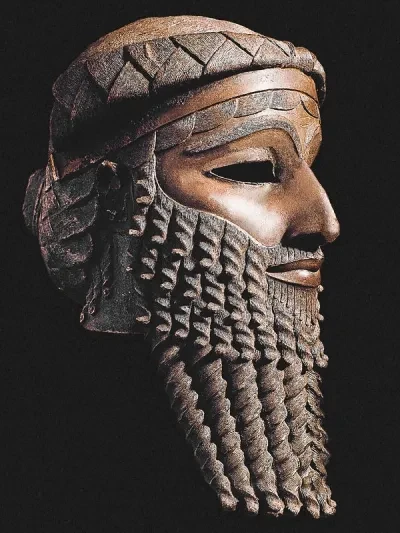
Nimrod, Eridu, and the Tower of Babel
Genesis 10:8–12 gives the extent of Nimrod's empire: "Now Cush became the father of Nimrod; he became a mighty one on the earth. He was a mighty hunter before the LORD; therefore, it is said, 'Like Nimrod a mighty hunter before the LORD.' And the beginning of his kingdom was Babel and Erech and Accad and Calneh in the land of Shinar. And from that land he went forth into Assyria, and built Nineveh, Rehoboth-Ir and Calah, and Resen between Nineveh and Calah; that is the great city." According to Genesis, Nimrod was closely associated with the cities Babel and Erech, the biblical name of Uruk.
Professor Douglas N. Petrovich and Egyptologist David Rohl have noted that the city of Eridu was also called Babel in ancient times. Eridu is believed by scholars to be the earliest city in southern Mesopotamia according to the Sumerian King List. (1) A massive platform was constructed in Eridu that was not finished and then abandoned. Hundreds of years later another king placed a temple on the site. This platform is thought by Professor Petrovich and Rohl to be the remains of the Tower of Babel mentioned in Genesis. (2)
"A king called Enmerkar is traditionally called the founder of Eridu (Babel). Rohl notes parallels between Enmerkar and Nimrod. Both Enmerkar and Nimrod were noted hunters. The suffix kar at the end of Enmerkar's name means hunter. The rendering in Hebrew would be Nimru the hunter. Nimrod as grandson of Ham belongs to the second generation after the flood according to the Bible. This is also true of Enmerkar who is recorded as the second ruler of Uruk (Erech in the Bible) after the flood in the Sumerian King List. Both men ruled over their empires in the land of Shinar." (3)
Josephus writes: "Now it was Nimrod who excited them to such an affront and contempt of God. He was the grandson of Ham, the son of Noah, a bold man, and of great strength of hand. He persuaded them not to ascribe it to God, as if it was through His means they were happy, but to believe it was their own courage which procured that happiness. He also gradually changed the government into tyranny, seeing no other way of turning men from the fear of God, to bring them into a constant dependence on his power. He also said he would be revenged on God, if He should have a mind to drown the world again; for he would build a tower too high for the waters to be able to reach; and that he would avenge himself on God for destroying their forefathers!" (4)
Egyptologist Rohl notes a Sumerian tablet called "Enmerkar and the Lord of Aratta" speaks of a golden age of man: "Once upon a time, ...there was no fear, no terror. Man had no rival, ...The whole universe, the people in unison, to Enlil (The Lord of Heaven) in one tongue gave praise." (5) This is similar to Genesis 11:1–2: "Now the whole earth had one language and one speech. And it came about as they journeyed east, that they found a plain in the land of Shinar and settled there." According to both accounts all the people were united in the past with one language and one religion. Enmerkar (Nimrod) in the Aratta tablet brings a new goddess for the people to worship to rival Enlil (The Lord of Heaven). It seems the Sumerians resented Enlil for causing the flood and began to worship other gods. (6)
Genesis 11:4–9
"And they said, 'Come let us build for ourselves a city, and a tower whose top will reach unto heaven, and let us make a name for ourselves, lest we be scattered abroad over the face of the earth.' And the LORD came down to see the city and the tower which the sons of men had built. And the LORD said, 'Behold they are one people, and they all have the same language. And this is what they begin to do, and now nothing which they purpose to do will be impossible for them. Come, let us go down and there confuse their language, that they may not understand one another's speech.' So, the LORD scattered them abroad from there over the face of the whole earth; and they stopped building the city. Therefore, its name was called Babel, because there the LORD confused the language of the whole earth; and from there the LORD scattered them abroad over the face of the whole earth."
Rohl notes: "I think we can begin to see a fascinating sequence of historical events here leading us from the antediluvian age of a supreme God to the realities of the post-flood era and a multiplicity of city-state deities." (7)
Ancient Flood Narratives
Many people have heard of the Gilgamesh record of the flood. "The Gilgamesh story contains the flood story, but it is full of fanciful and unbelievable details and dates to the 7th century B.C. Most scholars today believe that an unknown group of Jewish scribes copied elements of this old Babylonian story and inserted it into the book of Genesis sometime during the Exile. However, the earliest flood stories don't mention Gilgamesh at all and are similar to the biblical account." (8)
1. The Utnapishtim Tablet (c. 1200 B.C., drawing on much older material)
Similarities to Genesis:
- One favored man builds a large vessel to save life
- He takes animals aboard (often in pairs or groups)
- The flood destroys nearly all life
- The boat grounds on a mountain
- Birds (dove, swallow, and raven) are sent out to check for dry land
- A sacrifice was offered after the flood
- The survivor receives a form of blessing or immortality
This tablet is strikingly close to the biblical story and its specifics.
2. The Atrahasis Epic (c. 1800–1600 B.C.)
The wise hero is warned by the god Enki/Ea to build a boat because the gods will send a flood due to overpopulation and noise.
Similarities to Genesis:
- Creation of humanity precedes the flood narrative
- Divine warning to one righteous man
- Building a boat to preserve life (including animals)
- Post-flood sacrifice and divine response
- Emphasis on the survival of humanity through one family line
3. The Eridu (Sumerian) Tablet (c. 1600 B.C.)
Similarities to Genesis:
- The gods decide to destroy humanity
- One pious man is instructed in a dream to build a boat
- Preservation of life, animals, and seeds of mankind
- Post-flood renewal and divine favor; granted eternal life
- Links creation, antediluvian cities/kings, and the flood in a chronological framework
Dating the Flood
Sir Leonard Woolley, who discovered the flood deposit at Ur, estimated the flood took place sometime between 4,000 and 3,000 B.C. David Rohl states: "What we can say is that the best archaeological evidence for the flood still seems to be Sir Leonard Woolley's assessment." (9) "The Meso-American civilization of the Mayans developed a historical calendar going back several thousand years. The Mayan calendar gives the date of their cataclysmic flood as 3113 B.C." (10)
"For just as the lightning when it flashes out of one part of the sky, shines to the other part of the sky, so will the Son of Man be in His day. But first He must suffer many things and be rejected by this generation. And just as it happened in the days of Noah, so shall it in the days of the Son of Man: They were eating, they were drinking, they were marrying, they were being given in marriage, until the day that Noah entered the ark, and the flood came and destroyed them all."
Genesis 14 and the Kings of the East
"And it came about in the days of Amraphel king of Shinar, Arioch king of Ellasar, Chedorlaomer king of Elam and Tidal king of Goiim, that they made war... Twelve years they had served Chedorlaomer, but in the thirteenth year they rebelled. And in the fourteenth year Chedorlaomer and the kings that were with him came and defeated them."
"The Bible describes a coalition of four kings of the east who invaded territory south of the Dead Sea. Chedorlaomer king of Elam is leader of this coalition. Archaeologist Albright identified Chedorlaomer with the Edomite king Kuder-Nankhundi. This Edomite king was famous for his crushing military expedition against the cities of Akkad. Indeed, he was a crusading monarch." (1) "Amraphel is named as the king of Shinar. Shinar is the biblical designation of southern Mesopotamia (Sumer/Babylonia). Arioch king of Ellasar is similar to names in the Mari archives. Ellasar is commonly linked to Larsa, a major southern Mesopotamian city state. Arioch corresponds to Akkadian/Amorite names such as Eri-Aku/Arriwuk (servant of the moon god Aku/Sin). Tidal (king of Goiim) resembles Tudhaliya, a royal Hittite name." "Some scholars have suggested there may have been a king by that name that dates to the time of Abraham," according to Trevor Bryce in his book "The World of the Neo-Hittite Kingdoms," page 65. However, Bryce states "the chronology of the patriarchal narratives are much disputed."
The tablets discovered at the city state of Mari describe similar alliances. "They reveal a highly interconnected political world stretching from Elam and southern Mesopotamia to northern Syria and Anatolia. Alliances were pragmatic and fragile; kings routinely hedged bets, exchanged hostages or princesses, monitored each other's movements through networks of messengers and spies. In summary, Middle Bronze Age Near Eastern politics were defined by frequent, opportunist coalitions of kings and tribal leaders. The Mari archives in particular demonstrate that the kind of multinational campaign described in Genesis 14 was a realistic feature of the era's geopolitics, even if the specific historical episode remains unconfirmed outside the biblical account." (2) These don't seem to be the types of names a scribe would make up.
Genealogy and Genesis
Science has shown that all human beings are distantly related to one another, just as the Book of Genesis says.
"Genetic evidence shows humans are remarkably similar overall (roughly 99.9% of DNA is shared across people.)" humanorigins.si.edu
"The most recent common ancestor (MRCA) of all living humans—the most recent person who is the genealogical ancestor of everyone alive today—likely lived only a few thousand years ago (estimates place it roughly 2,000–5,000 years ago, with some models suggesting as recent as around 1,000 BCE..." scientificamerican.com
"In other words, any two people alive on Earth today share exactly the same set of ancestors from that point onward." en.wikipedia.org, Grok AI
Notes
(1) Gwendolyn Leik, Mesopotamia: The Invention of the City, p. 3.
(2) Professor Douglas N. Petrovich, Academia EDU, "Identifying the Tower of Babel," 10-3-23; also David Rohl, Legend: The Genesis of Civilization, p. 223.
(3) David Rohl, The Genesis of Civilization, p. 215.
(4) The New Complete Works of Josephus, trans. William Whiston, Antiquities, chapter 4, 2, p. 56.
(5) David Rohl, Legend: The Genesis of Civilization, p. 218.
(6) Rohl, p. 220a.
(7) Rohl, p. 221.
(8) Grok A.I.
(9) David Rohl, Legend: The Genesis of Civilization, p. 179.
(10) Rohl, p. 181.
Genesis 14 Notes:
(1) Victor Hamilton, The Book of Genesis Chapters 1–17, The New International Commentary of the Old Testament, pp. 399–400.
(2) Grok A.I.