Hebrews in Egypt
Back to HomeBible Archaeology
Hebrews in Egypt
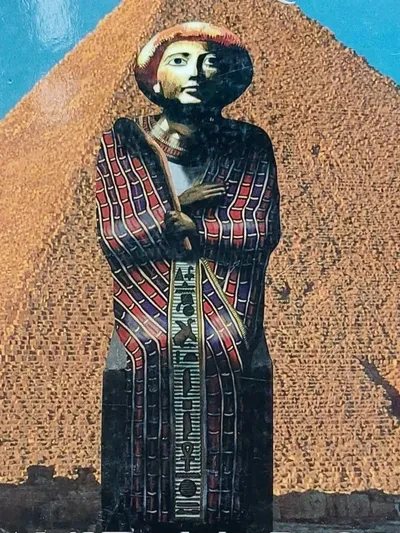
Joseph in Egypt: The Palace at Avaris
In 1966 Manfred Bietak and his team of archaeologists began digging in the Eastern Delta of Egypt at an ancient city called Avaris. "Avaris is located partly under the New Kingdom city of Pi-Ramesses in an area accepted by most scholars as the biblical Goshen. Bietak uncovered a huge settlement of mud brick houses dated from the 12th dynasty to the closing years of the 13th dynasty during the Middle Kingdom of Egypt. The population of this settlement was not Egyptian but from Syro-Palestine or Canaan. At the end of the 13th dynasty, the settlement was abandoned. Where did all the people go?" (1)
"In the middle of this community was a mansion or small palace, built for a person of high status. This building contained an audience hall for receiving guests, a family room, bedrooms, storerooms, courtyard, gardens and other features. Egyptologist David Rohl identified this building as the palace of a Proto-Joseph or Joseph-like person. The palace has two rows of twelve columns which may represent the twelve tribes of Israel. The palace is similar to those in Harran, Syria — the area where Joseph's descendants came from. The burials in the garden behind the palace were not Egyptian but people from Syria-Palestine." (2)
Joseph's Tomb
In 1986 Bietak continued his excavation of the palace grounds and discovered 12 tombs to the rear of the building — one large pyramid-shaped tomb with eleven smaller ones. A large statue of a person with a multi-colored robe had been smashed to pieces and was found in the pyramid-shaped tomb. The Bible records that Joseph wore such a coat or robe. This was a statue of a non-Egyptian, and it was a rare honor for a foreigner to be given a tomb of this type. (3)
Archaeologists call this person a Proto-Joseph or Joseph-like person, while Rohl says "The Egyptian name of the Vizier is Ankhu. Ankhu is the core of Joseph's Egyptian name recorded in the Bible. In Genesis 41:15 Pharaoh gave Joseph an Egyptian name Zapheneth Pa-Aneah," which according to Egyptologists Kenneth Kitchen and Rohl interprets as "He who is called the one who lives." (4a) Kitchen also remarked "Joseph's Egyptian name was popular during the Middle Kingdom and not later." (4b)
The leading art historian and curator of the Metropolitan Museum in New York, Dorothea Arnold, examined the style and workmanship of this statue and dates it to the time of Pharaoh Amenemhat III in the 12th dynasty of Egypt. She also states "This statue is one of the most important discoveries in Egypt of the last quarter century." (5) Rohl notes "That during the reign of this king the Nile had extreme flooding which would have caused widespread famine as in the Joseph story in Genesis." (6) The Vizier Ankhu organized a department of the government to collect and distribute grain supplies similar to what Joseph did. Dr. Peter Vander Veen of the University of Mainz said the details of Ankhu's Viziership "fits the story of Joseph remarkably well." (7)
The so-called "canal of Joseph" was reconstructed during the reign of Amenemhat III, probably to deal with the flooding, since this pharaoh made the canal wider and deeper. (8) It could be a coincidence that the names of Joseph and Pharaoh Amenemhat III are associated with this canal, but it also may reflect an older tradition.
"The 'Joseph' statue was probably destroyed after the collapse of the 13th dynasty in the time of Moses, and after the Israelites left Egypt. The remaining eleven tombs on the palace grounds would have been burial places for the brothers of Joseph," according to Rohl. "It seems that these Asiatic people from Canaan prospered, were able to marry Egyptian women and achieved high status under the 12th dynasty Pharaohs. However, under the 13th dynasty rulers their status deteriorated drastically," according to Egyptologist Georges Posener. (9) This is exactly what Exodus 1:8 states: "Now there arose a new king over Egypt, who did not know Joseph."
Scholars do not know the reason the 13th dynasty collapsed, and Egypt went into a steep decline for several centuries until the rise of the New Kingdom. John Romer states the Middle Kingdom "Kings fade into the blank void," (10) and Wolfram Grajetzki remarks "The Middle Kingdom ends in darkness for us." (11) There is one document that has been dated to the end of the Middle Kingdom that lets us know what was happening in Egypt — the "Admonitions of an Egyptian Sage."
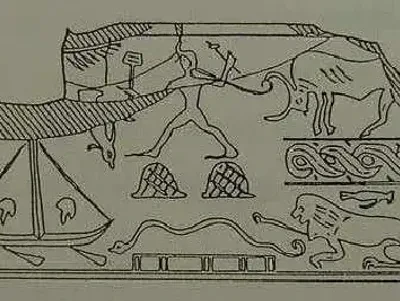
The Seal of Joseph
The seal was found in the palace at Avaris. The accepted theory is that it shows symbols from the Canaanite religion. However, Rabbi Michael S. Bar-Ron and many biblical scholars interpret the seal as representing the twelve tribes of Israel.
Rabbi Michael S. Bar-Ron notes: "That in Moses' blessings, Joseph is a fighting bull. Deuteronomy 33:16b–17a: 'Let it come to the head of Joseph, and to the crown of the head of the one distinguished among his brothers. As the firstborn of his ox, majesty is his, and his horns are the horns of the wild ox; with them he shall push the peoples, all at once to the ends of the earth.'" The bull is over a symbol for water. Jacob's son Reuben is described as unstable water in Jacob's blessing in Genesis 49:3–4. This would represent the ascendency of Joseph over Reuben. (1) and (2)
"Levi — a bird of prey, possibly a falcon. The Levi priesthood would be scattered among the tribes. Levi is the third son of Jacob, and this is the third symbol from the top." (3) "Judah, the lion, is the fourth symbol from the top and the fourth son of Jacob. Genesis 49:9: 'Judah is a lion's whelp; from the prey my son, you have gone up. He couches, he lies down as a lion, and as a lion, who dares to rouse him up?'" (4)
"Joseph is represented as a 'Man of War' that stands on the twin peaks of Mt. Gerizim and Mt. Ebal, the crown of Jacob's inheritance that he bequeathed to Joseph." (5) "Dan is represented as a serpent in Jacob's blessing. Genesis 49:17: 'Dan shall be a serpent in the way, a horned snake in the path, that bites the horse's heels, so that the rider falls backward.' The snake is the fifth symbol from the top, and Dan was the fifth son of Jacob." (6)
"Simeon is represented as the gated wall of Shechem, in which Simeon plundered and murdered people in Genesis 34. This symbol at the bottom of the seal fits well with Simeon who wanted to murder Joseph but sold him as a slave instead." (7) "Asher is shown as an olive branch with eight leaves, near the top. Asher was the eighth child of Jacob. Deuteronomy 33:24: 'And of Asher he said, more blessed than the sons of Asher, may he be favored by his brothers, and may he dip his foot in oil.'" (8)
"Naphtali appears as a deer or antelope set loose on the seal. Genesis 49:21: 'Naphtali is a doe let loose, he gives beautiful words.'" (9) "Zebulon and Issachar — a ship with the bounty of overseas trade. Moses blesses Zebulon and Issachar in Deuteronomy 33:18–19: 'And of Zebulon he said, rejoice Zebulon in your going forth, and Issachar, in your tents. They shall call peoples to the mountain; there they shall offer righteous sacrifices. For they shall draw out the abundance of the seas, and the hidden treasures of the sand.'" (10) "Gad may be symbolized by an upside-down mushroom, a symbol of fertility and good luck. Genesis 30:10–11: 'And Leah's maid Zilpah bore Jacob a son. Then Leah said, "How fortunate!" So, she named him Gad.'" (11)
Conclusion
"The seal impression found depicts the early symbols of the twelve tribes of Israel, with three symbols that are speculative. The remaining identifications match the blessings in the Torah for the tribes of Simeon, Judah, Zebulon, Dan, Asher, Issachar and Joseph. The symbols of Simeon and Judah, the main culprits of the sale of Joseph into slavery, are beneath all the others at the bottom of the image. Based on the evidence above, it is difficult to escape the conclusion that this is the seal of the house of Joseph. The founders of Israel's twelve tribes should no longer be dismissed as mythical figures." (12)
Egyptologist David Rohl, once agnostic, has in his more recent writings become convinced that the figure is the patriarch Joseph from the Bible. He states: "Joseph served as the Vizier Ankhu which is the core of the Egyptian name Zapheneth Pa-Aneah recorded in Genesis 41:15. Ankhu served under 12th-Dynasty co-regent pharaohs Senuseret III and Amenemhat III and continued as chief minister under their successors, Amenemhat IV and Sobekneferu. The great famine of Joseph's time occurred during the reign of Amenemhat III after a series of catastrophic Nile floods." (13)
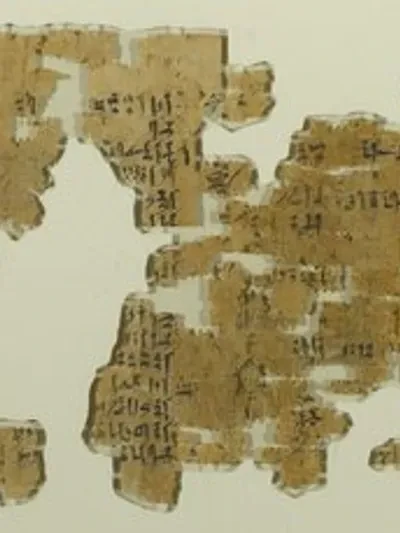
The Hieratic Papyrus and Hebrew Slaves
The Hieratic Papyrus from the Middle Kingdom of Egypt contains the names of Hebrew slaves and notes on biblical Pithom.
The Hieratic Papyrus dating from the 12th to 13th Dynasties of Egypt contains 95 entries of slave names. Egyptologist William C. Hayes published his translation of this papyrus and identified 30 of the names as non-Egyptian. "Some of the non-Egyptian names on the list are either identical or similar to Hebrew names in the Old Testament. A female name of Menahem is present along with Issachar, Asher, and Shepra, which is similar to Shiphrah the Hebrew midwife in the book of Exodus. Also, someone named Apiru Rishpu (or Rishpu the Apiru)." Apiru may have a relationship to the word Hebrew. Rohl thinks "These slaves were part of the 'mixed multitude' of Asiatics that would in the future eventually leave Egypt under the leadership of Moses." Rohl was also surprised "That an Egyptian official from the 13th Dynasty would have over 40 slaves in his personal possession, most of them female." (1)
"One of the most common titles of slaves from Canaan was 'Household Servant,' which would have been Joseph's title when he was working for Potiphar, captain of Pharaoh's guard in Genesis. This papyrus also mentions the main prison in Egypt was located at Thebes, 400 miles south of the Delta. Royal officials under arrest were probably placed there along with Joseph in the Genesis story. Few scholars today doubt that the Hebrews were slaves in Egypt. This is not the kind of story that people would make up." (2)
"There are etymological and religious associations between the biblical city of Pithom and the 12th and 13th Dynasty city of Heliopolis, the biblical city of On. Pithom means 'House of Atum' while Heliopolis is the primary center for the worship of Atum (the setting sun) and Ra (the midday sun). The Greek translation of the Bible associates Israelite slave labor in Exodus 1:11 with Pithom, Pi-Ramesses and On (Heliopolis)." (3) Most scholars search in vain for an Exodus during the Ramesside period and choose another site for Pithom in his time.
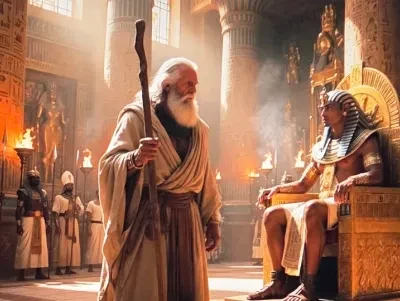
The Admonitions of an Egyptian Sage and the Exodus
The Admonitions of an Egyptian Sage — made famous by Immanuel Velikovsky — otherwise known as the Ipuwer Papyrus — has been "dated by most scholars to the end of the Egyptian Middle Kingdom and may fall into the category of national calamity." (1) In the papyrus a man named Ipuwer addresses someone called the "Lord of All." Some scholars think the "Lord of All" is a Pharaoh, but Enmarch admits in the Middle Kingdom this was the name of a god. (2) Ann Habermehl and other scholars have said "it describes chaotic events in Egypt after the Israelites left Egypt." (3) Below is a condensed comparison of the text with the account in Exodus.
Ipuwer Papyrus
Lo, the virtuous man goes in mourning of what has happened to the Land. Lo foreigners have overrun the whole of Egypt. Towns are destroyed and upper Egypt has become a waste.
Exodus
Exodus 10:7 — "Do you not realize that Egypt is destroyed?"
Ipuwer Papyrus
Lo, poor men have become owners of wealth, and he who could not make sandals for himself is now a possessor of wealth. The robber is a possessor of riches and a plunderer.
Exodus
Exodus 12:36 — "Thus they plundered the Egyptians."
Ipuwer Papyrus
Lo, (Hearts) are violent, pestilence is throughout the land, blood is everywhere, death is not lacking.
Exodus
Exodus 9:2 — "Behold the hand of the Lord will come with a very severe pestilence on your livestock..." Exodus 12:12–13 — "For I will go through the land of Egypt on that night and will strike down all the firstborn..."
Ipuwer Papyrus
Lo, the river is blood. Yet men drink of it. Men shrink from human beings and thirst after water.
Exodus
Exodus 7:17–18 — "Thus says the LORD, 'By this you shall know that I am the Lord, Behold I will strike the water that is in the Nile with the staff that is in My hand, and it will be turned to blood.'"
Ipuwer Papyrus
Lo, trees are felled, and branches are stripped off. Lo, great and small say: "I wish I might die."
Exodus
Exodus 9:24–25 — "So there was hail and fire flashing continually in the midst of the hail, very severe... the hail struck every plant of the field and shattered every tree of the field."
Ipuwer Papyrus
Behold, fire has gone up on high, and its burning goes forth against the land. The King has been overthrown by the rabble.
Exodus
Exodus 14:27–28 — "...the sea returned to its normal state at daybreak, while the Egyptians were fleeing right into it... not even one of them remained."
The remainder of the papyrus mentions that foreign trade collapsed along with the Egyptian state. Egypt descends into anarchy. A Pharaoh named Dudimose I may be Tutimaos, in whose reign according to the Egyptian priest Manetho, the Hyksos conquered Egypt. Manetho recorded: "Tutimaos — In his reign, for what cause I know not, a blast of God smote us; and unexpectedly from the regions of the east, invaders of an obscure race marched in confidence of victory against our land. By main force they easily seized it without striking a blow; and having overpowered the rulers of the land, they burnt our cities." (5) Manetho and Ipuwer seem to be referring to the same event.
The Tenth Plague: Archaeological Evidence
According to the Bible, at midnight Yahweh struck down all the firstborn of Egypt. Egyptologist Rohl states there is evidence for such a catastrophe at the end of the 13th Dynasty. "Egyptologist Bietak and his team discovered a gruesome scene. All over the city of Avaris they found shallow burial pits in which victims of some terrible disaster had been hurriedly covered. The bodies had not been buried in the proper Egyptian burial fashion. There were no grave goods placed with the dead, but instead the bodies were all buried in mass graves thrown one on top the other. Egyptologists at the time were convinced that a plague or some other sudden catastrophe had happened at the time." Rohl identifies the Pharaoh of the Exodus as Dudimose, the last king of the 13th Dynasty, in whose reign according to Manetho 'God' smote the Egyptians.
Chariots During the Middle Kingdom
Egyptologists state that an Asiatic people called the Hyksos invaded Egypt shortly after the end of the 13th Dynasty and introduced chariots and horses in warfare. However, Rohl notes remains of horses have been found which date to the 13th Dynasty, and so chariots and chariot warfare must date to an earlier time — just as the Bible states in Genesis and Exodus. Rohl and German scholar Wolfgang Helck argue "that a stela of Pharaoh Dudimose pictures his son with a pair of chariot gloves." (6) Chariots for ceremonial occasions date back to the time of Joseph. Genesis 41:43 states Joseph was given the "second chariot" of Pharaoh, which seems to indicate there were not many of them at that time. Rohl has shown that the time of Joseph was during the 12th Dynasty Pharaoh Amenemhat III. During Senuseret III and Amenemhat III\'s time we have on cylinder seals pictures of two wheeled war chariots in Assyria and the Egyptians must have been aware of them. The chariot was pulled two horses, and the driver held an axe. (7) We also have pictures of primitive four wheeled war chariots from the city of Ur in Mesopotamia from a much earlier date. "The early Babylonians had a prestigious vehicle that wealthy people could own for travel. These were two wheeled wagons called \'hand carts\' and pulled by donkeys" which sounds a lot like primitive chariots. (8) "There are several texts that give some indication of the actual combat use of chariots in the Middle Bronze age in Mesopotamia. These accounts were on a limited scale probably due to the enormous cost of horses at that time." (9) Chariot technology was very ancient, but it was of course refined and perfected during the New Kingdom. Therefore, it is probable that war chariots in some form were developed toward the end of the 13th Dynasty.
Notes
Joseph at Avaris / Joseph's Tomb:
(1) David Rohl, Eden to Exile, pp. 166–168.
(2) David Rohl, Exodus: Myth or History, pp. 106–110.
(3) David Rohl, Pharaohs and Kings, pp. 360–367.
(4a) David Rohl, Exodus: Myth or History, pp. 103–104. (4b) David Rohl, Pharaohs and Kings, p. 350.
(5) Rohl, Pharaohs and Kings, pp. 93–102. (6) p. 114. (7) p. 114.
(8) ChatGPT A.I. (9) David Rohl, The Lords of Avaris, p. 81.
(10) John Romer, A History of Ancient Egypt: From the Great Pyramid to the Fall of the Middle Kingdom, p. 521, St. Martin's Press.
(11) Wolfram Grajetzki, The Middle Kingdom of Ancient Egypt, p. 75, Gerald Duckworth and Co., Ltd.
Seal of Joseph:
Rabbi Michael S. Bar-Ron, "The Seal of Joseph in His Palace at Tell Ed-Dab'a": (1)–(2) p. 7; (3) p. 8; (4) p. 9; (5) p. 9; (6) p. 11; (7) p. 12; (8)–(9) p. 13; (10) p. 14; (11) p. 15; (12) p. 16.
(13) David Rohl, Legend: The Genesis of Civilizations, p. 16.
Hieratic Papyrus:
(1) David M. Rohl, Pharaohs and Kings, pp. 276–278.
(2) Condensed from "The Bible and Spade Series: Joseph in Egypt," Charles Aling, PhD, March 15, 2010; John Bright, A History of Israel, Fourth Edition, pp. 120–121.
(3) Grok A.I.
Ipuwer / Exodus:
(1) William Kelly Simpson, The Literature of Ancient Egypt, p. 188, Yale University Press.
(2) Roland Enmarch (2011), "The Reception of A Middle Kingdom Poem: The Dialogue of Power and The Lord of All."
(3) Ann Habermehl, "The Ipuwer Papyrus and the Exodus," Proceedings of the Eighth International Conference on Creationism (Pittsburgh, 2018), pp. 1–6.
(4) Jack Finegan, Archaeological History of the Ancient Middle East, p. 252, 1996, Westview Press.
(5) Manetho, Aegyptiaca, p. 79.
(6) David M. Rohl, Pharaohs and Kings, pp. 278–284. (7) David Rohl, The Lords of Avaris, p. 240.
Chariots During the Middle Kingdom:
(7) David Rohl, The Lords of Avaris, p. 240. (8) Benjamin R. Foster, The Age of Agade, Inventing Empire in Ancient Mesopotamia, p. 96. (9) William J. Hamblin, Warfare in the Ancient Near East to 1600 B.C., pp. 150–153.